

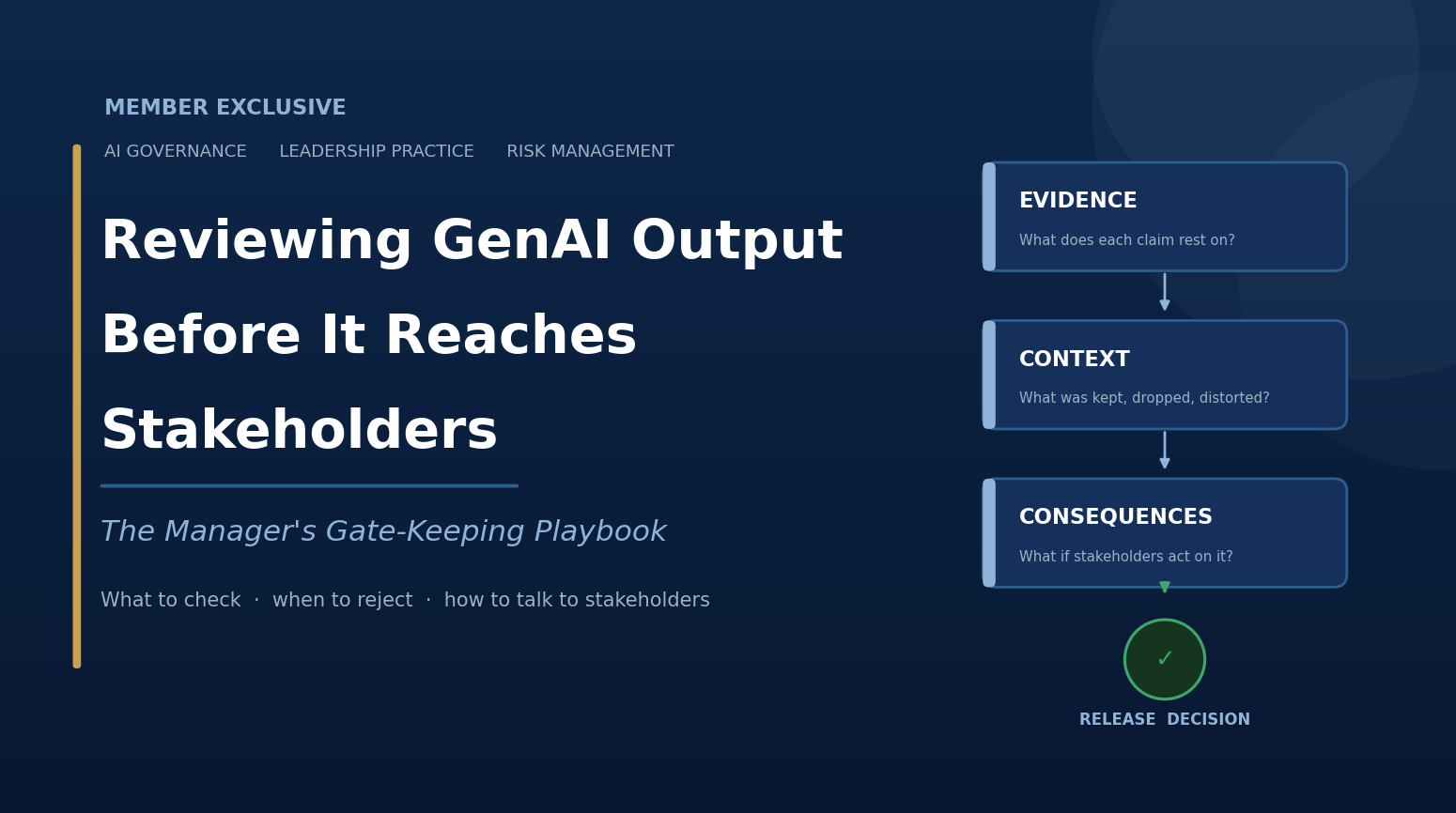
The output looks polished. That is the problem. Polished prose hides weak evidence, and the approving manager, not the model, owns what happens next.
You receive a briefing note, a slide deck, or a client-facing summary. Your team tells you AI helped write it. It reads cleanly: the structure is logical, the tone is confident, the citations look authoritative. The temptation is to skim it, nod, and forward it on.
Resist that. Fluent prose is not evidence of accurate content. Generative models are optimized to produce text that sounds right, not text that is right, and the gap between the two is exactly where stakeholder-facing work goes wrong.
This playbook gives you a structured way to close that gap: a three-layer review gate, a use / revise/reject decision rule, the failure modes worth memorizing, and templates you can adopt this week.
The core principle, drawn from where every major governance framework converges: treat stakeholder-facing GenAI output as a high-variance draft, not as finished work.
